Seren Labs | UK | Research Peptides
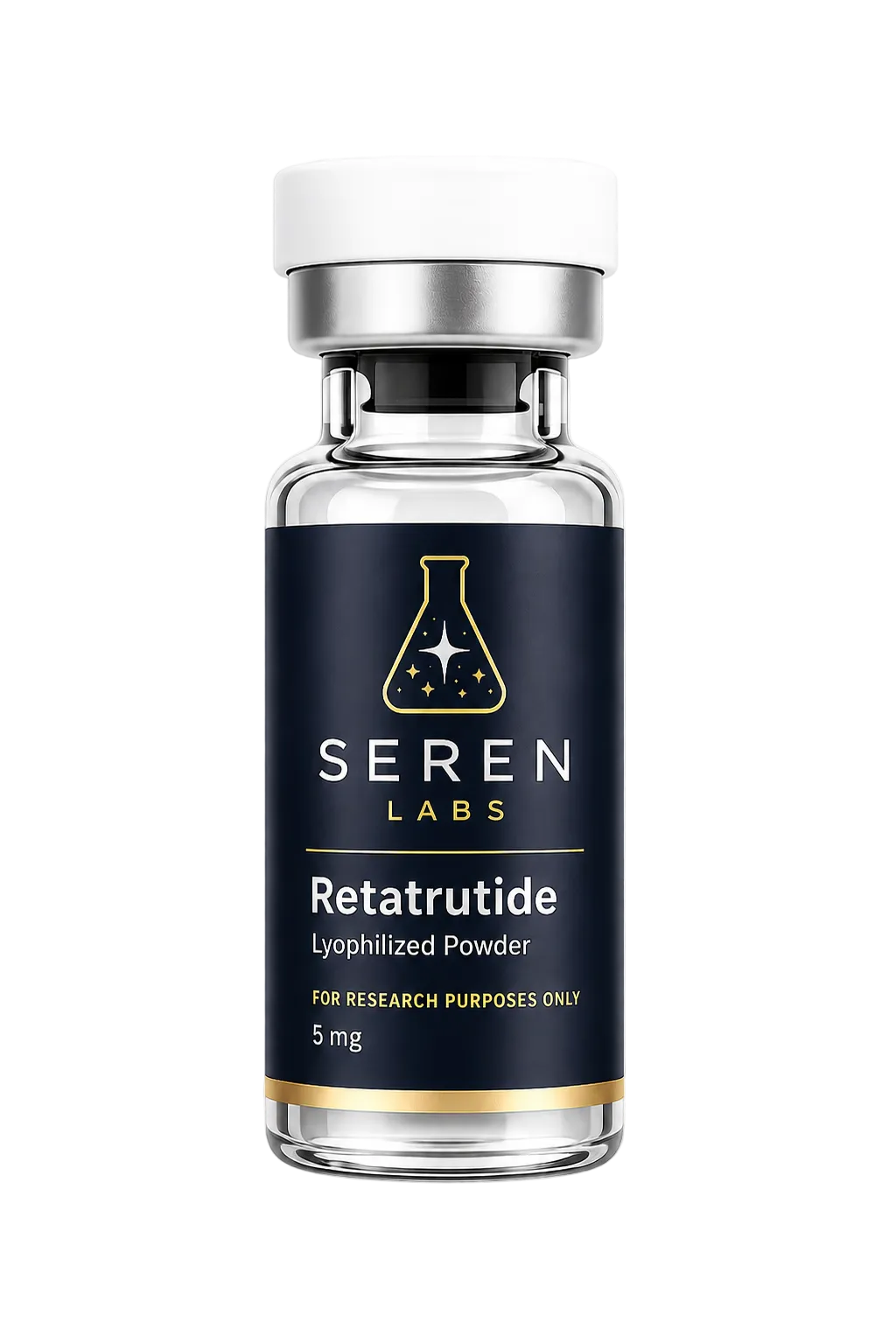
Retatrutide
Retatrutide
Couldn't load pickup availability
This product is synthesized and distributed exclusively for in vitro laboratory experimentation and in vivo animal research models. It is strictly NOT intended for human consumption, diagnostic procedures, or therapeutic use. All handling, reconstitution, and deployment must be conducted by qualified laboratory professionals using proper personal protective equipment.
Overview
Retatrutide is a synthetic, long-acting peptide engineered as a triple hormone receptor agonist, targeting the glucagon-like peptide-1 (GLP-1), glucose-dependent insulinotropic polypeptide (GIP), and glucagon receptors. This multi-receptor pharmacological profile has made Retatrutide an important investigational compound in metabolic research, enabling scientists to explore the combined physiological effects of incretin and glucagon signalling on energy homeostasis, glucose metabolism, adipose tissue biology, and hepatic function.
Its extended duration of action and balanced receptor activity make it a valuable tool for studying complex metabolic pathways in both cellular and preclinical animal models.
Key Research Applications
Triple Receptor Pharmacology:
Widely investigated for its simultaneous activation of GLP-1, GIP, and glucagon receptors to evaluate integrated endocrine signalling pathways involved in metabolic regulation.
Energy Homeostasis & Metabolic Regulation:
Utilized in experimental models to examine mechanisms influencing energy expenditure, nutrient utilization, substrate oxidation, and whole-body metabolic adaptation.
Glucose Metabolism:
Studied in laboratory settings to investigate receptor-mediated effects on glucose homeostasis, insulin secretion, glucagon signalling, and glycaemic regulation in metabolic disease models.
Adipose Tissue Biology:
Researched for its influence on adipocyte function, lipid metabolism, fat storage dynamics, and cellular pathways involved in energy balance.
Hepatic Metabolism:
Applied in experimental studies evaluating liver lipid metabolism, hepatic glucose production, and metabolic signalling associated with non-clinical models of metabolic dysfunction.
Cardiometabolic Research:
Investigated for its effects on biomarkers associated with cardiovascular and metabolic physiology in preclinical research, including inflammatory signalling, lipid metabolism, and vascular function.
Technical Specifications
Classification: Triple GLP-1/GIP/Glucagon Receptor Agonist
Peptide Type: Synthetic Long-Acting Peptide
Receptor Targets: GLP-1 Receptor (GLP-1R), GIP Receptor (GIPR), Glucagon Receptor (GCGR)
Appearance: White to off-white lyophilized powder
Purity: ≥98% (HPLC)
Solubility: Water-soluble following appropriate laboratory reconstitution procedures
Scientific References & Literature Citations
Discovery & Pharmacology
Jastreboff, A. M., et al. (2023). Triple-Hormone-Receptor Agonist Retatrutide for Obesity – A Phase 2 Trial. New England Journal of Medicine, 389, 514–526.
Coskun, T., et al. (2022). LY3437943, a Novel Triple GIP, GLP-1 and Glucagon Receptor Agonist for the Treatment of Obesity. Cell Metabolism.
Metabolic Mechanisms
Müller, T. D., et al. (2018). Glucagon Receptor Activation in the Regulation of Energy Balance and Body Weight. Molecular Metabolism.
Incretin Biology
Nauck, M. A., & Meier, J. J. (2019). Incretin Hormones: Their Role in Health and Disease. Diabetes, Obesity and Metabolism.
Campbell, J. E., & Drucker, D. J. (2021). Pharmacology, Physiology and Mechanisms of Incretin Hormone Action. Cell Metabolism.
Technical Documentation Notice
This material is supplied exclusively for laboratory research purposes. For validated technical information regarding triple receptor agonists, incretin biology, glucagon receptor pharmacology, and metabolic signalling pathways, researchers are encouraged to consult peer-reviewed scientific literature and established biomedical indexing resources, including PubMed/NCBI, using the primary research publications referenced above.
For Research Use Only (RUO). Not for human consumption, veterinary use, clinical application, or diagnostic procedures.
Share