My Store
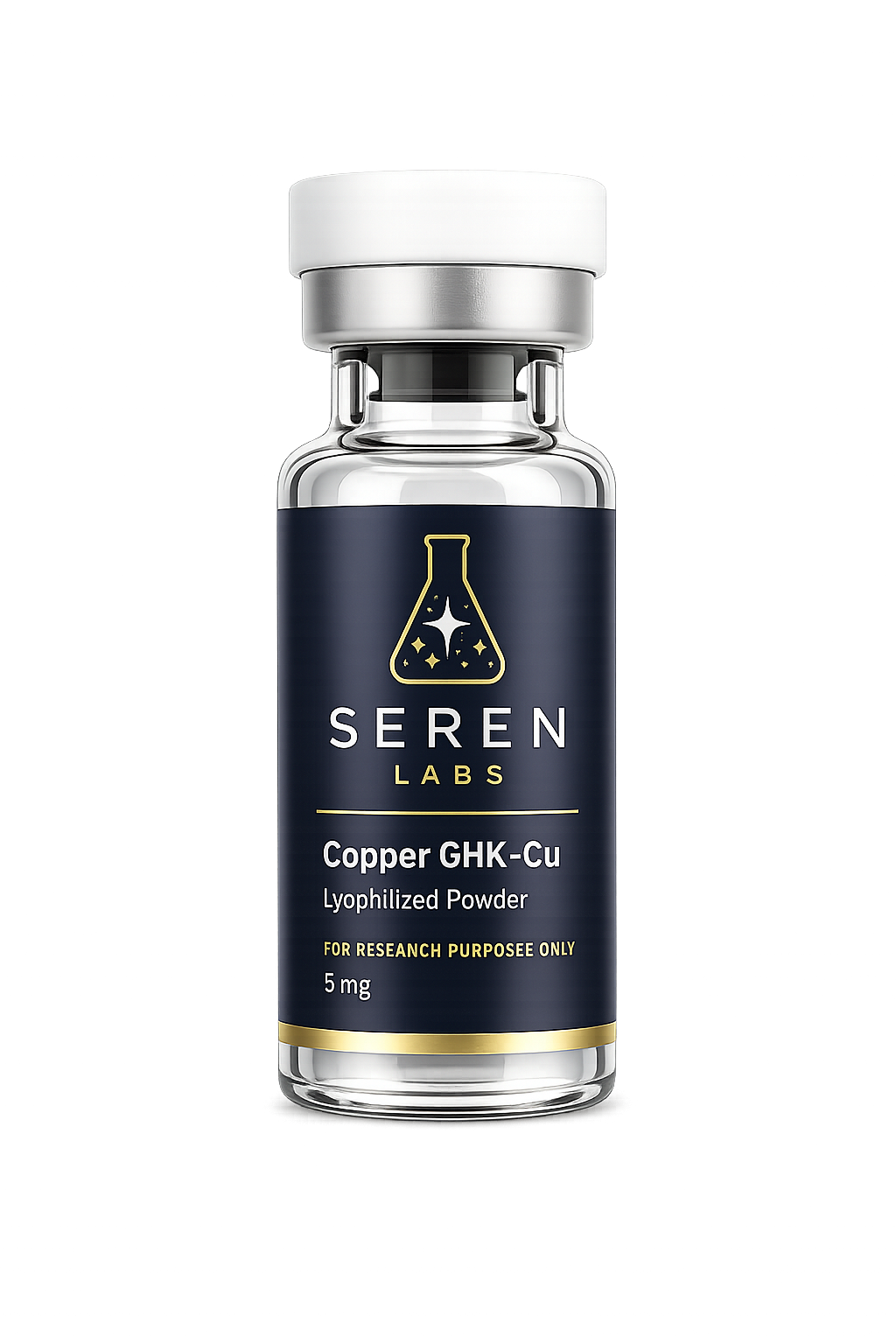
Copper GHK-Cu
Copper GHK-Cu
Couldn't load pickup availability
This product is synthesized and distributed exclusively for in vitro laboratory experimentation and in vivo animal research models. It is strictly NOT intended for human consumption, diagnostic procedures, or therapeutic use. All handling, reconstitution, and deployment must be conducted by qualified laboratory professionals using proper personal protective equipment.
Overview
GHK-Cu is a naturally occurring tripeptide (Glycyl-L-Histidyl-L-Lysine) complexed with divalent copper (\(Cu^{2+}\)). Extensively utilized in extracellular matrix (ECM) biochem research, this peptide complex acts as a key modulator of tissue remodeling. It exhibits a high affinity for copper, serving as a specific biological carrier to regulate cellular copper uptake and gene expression profiles without inducing free radical cytotoxicity.
Key Research Applications
-
Extracellular Matrix (ECM) Synthesis: Widely studied for its capacity to stimulate fibroblasts and upregulate the gene expression of collagen, elastin, and glycosaminoglycans (GAGs) in in vitro tissue models.
-
Tissue Repair and Remodeling Signaling: Investigated in cellular healing paradigms for its role in modulating metalloproteinases (MMPs) and their inhibitors (TIMPs), facilitating a balanced tissue remodeling cascade.
-
Anti-Inflammatory & Antioxidant Mechanisms: Explored for its ability to suppress pro-inflammatory cytokines (such as TNF-alpha and IL-1) and elevate antioxidant enzyme activities (like superoxide dismutase) in laboratory assays.
-
Angiogenesis and Microcirculation: Utilized to evaluate vascular endothelial growth factor (VEGF) expression and basic fibroblast growth factor (bFGF) production in microvascular endothelial cell cultures.
-
Stem Cell Proliferation: Researched in regenerative medicine models to evaluate its effects on the proliferation and differentiation of epidermal and mesenchymal stem cells.
Technical Specifications
-
Sequence: Gly-His-Lys (complexed with \(Cu^{2+}\))
-
Molecular Formula: \(C_{14}H_{22}CuN_{6}O_{4}\)
-
Molecular Weight: ~401.9 Da
-
Appearance: Characteristic deep blue crystalline powder (when lyophilized)
-
Classification: Copper-binding tripeptide / ECM modulator
Scientific References & Literature Citations
-
Discovery & Foundational Biochemistry:
-
Pickart, L. (2008). "The human tri-peptide GHK and tissue remodeling: Journal of Biomaterials Science." Polymer Edition, 19(8), 969-988.
-
Pickart, L., et al. (2015). "GHK Peptide as a Natural Modulator of Multiple Cellular Pathways in Skin Regeneration." BioMed Research International, 2015, Article ID 648108.
-
-
Gene Expression & ECM Remodeling:
-
Siméon, A., et al. (2000). "Expression of glycosaminoglycans and small proteoglycans in wounds: modulation by the tripeptide-copper complex glycyl-L-histidyl-L-lysine-Cu2+." Journal of Investigative Dermatology, 115(6), 962-968.
-
Pickart, L., et al. (2018). "Regenerative and Protective Actions of the GHK-Cu Peptide in the Light of the New Gene Data." International Journal of Molecular Sciences, 19(7), 1987.
-
-
Antioxidant and Anti-Inflammatory Signaling:
-
Gruchlik, A., et al. (2012). "Effect of Gly-His-Lys-Cu2+ on the expression of pro-inflammatory cytokines in human dermal fibroblasts." Cellular & Molecular Biology Letters, 17(3), 345-356.
-
Finkley, M. B., et al. (2005). "Copper Peptide Complexes: The Next Generation of Tissue Repair Modulators." Dermatologic Therapy, 18(4), 215-226.
-
Technical Documentation Notice:
This material is offered for laboratory research use only. For verified technical documentation regarding copper-binding tripeptides, fibroblast activation mechanics, and gene expression arrays, please cross-reference standard medical indexing networks (e.g., PubMed/NCBI) using the foundational research publications listed above.
Share