My Store
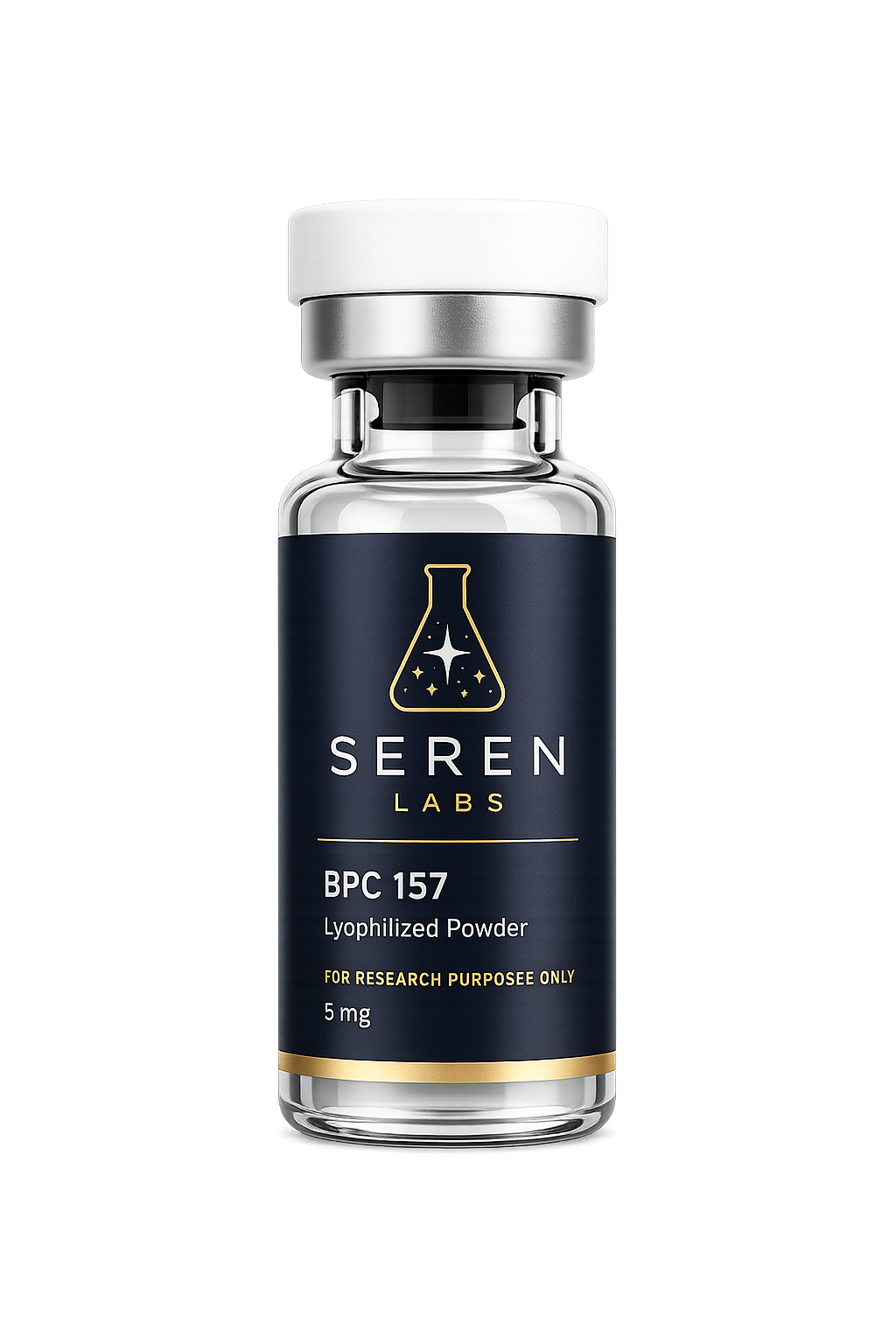
BPC-157
BPC-157
Couldn't load pickup availability
This product is synthesized and distributed exclusively for in vitro laboratory experimentation and in vivo animal research models. It is strictly NOT intended for human consumption, diagnostic procedures, or therapeutic use. All handling, reconstitution, and deployment must be conducted by qualified laboratory professionals using proper personal protective equipment.
Overview
BPC-157 (Body Protection Compound-157) is a synthetic pentadecapeptide composed of 15 amino acids. It is derived from a protective partial sequence discovered in human gastric juice. In laboratory settings, this stable regulatory compound serves as a foundational model for exploring cytoprotective pathways, organoprotection, and accelerated tissue healing across multiple physiological systems.
Key Research Applications
-
Angiogenesis Modulation: Extensively utilized to evaluate the upregulation of Vascular Endothelial Growth Factor (VEGF) and the activation of internal VEGFR2 pathways to model new blood vessel formation.
-
Soft Tissue Repair Signaling: Investigated in musculoskeletal research models for its potential to accelerate the healing of transected or damaged tendons, ligaments, and skeletal muscles by promoting fibroblast proliferation.
-
Gastrointestinal Cytoprotection: Studied in cellular models of inflammatory bowel conditions to analyze how it preserves mucosal integrity, counteracts NSAID-induced toxicity, and modulates the nitric oxide (NO) synthesis axis.
-
Brain-Gut Axis & Neuroprotection: Used to examine protective cellular cascades in the central nervous system, specifically looking at its interactions with the somatosensory and GABAergic neurotransmitter systems during physical trauma models.
-
Nitric Oxide Axis Regulation: Serves as a key analog to investigate the balancing mechanisms between endothelial (eNOS) and inducible (iNOS) nitric oxide synthase activation under systemic stress.
Technical Specifications
-
Sequence: Gly-Glu-Pro-Pro-Pro-Gln-Gly-Ala-Pro-Pro-Pro-Arg-Pro-Ala-Asp (GEPPPGGAPPPRPAD)
-
Molecular Formula: C₆₂H₉₈N₁₆O₂₂
-
Molecular Weight: ~1419.5 Da
-
Classification: Cytoprotective Pentadecapeptide
Scientific References & Literature Citations
-
Foundational Gastric & Cytoprotective Discovery:
-
Sikiric, P., et al. (2011). "Toxicity by NSAIDs and BPC 157: Gastric ulcers, intestinal lesions, liver lesions, and encephalopathy." Current Pharmaceutical Design, 17(16), 1612-1632.
-
Seiwerth, S., et al. (2014). "BPC 157 and blood vessels: Journal of Pharmacological Sciences." Journal of Pharmacological Sciences, 124(4), 421-426.
-
-
Soft Tissue Healing & Fibroblast Proliferation:
-
Chang, C. H., et al. (2011). "The pentadecapeptide BPC 157 enhances the healing of growth hormone receptor-deficient muscle and tendon injuries." Journal of Orthopaedic Research, 29(8), 1161-1167.
-
Gwyer, D., et al. (2019). "Gastric pentadecapeptide BPC 157 promotes angiogenesis and soft tissue healing: A review." Life Sciences, 228, 142-150.
-
-
Angiogenesis Mechanisms & VEGF Pathway:
-
Hsieh, M. J., et al. (2017). "Therapeutic potential of pro-angiogenic pentadecapeptide BPC 157 in tissue repair and healing cascades." Molecules, 22(12), 2155.
-
Radeljak, S., et al. (2020). "BPC 157 counteracts VEGF-receptor blocker-induced damage and modulates local endothelial cell activation." Biomedicines, 8(9), 324.
-
Technical Documentation Notice: This material is offered for laboratory research use only. For verified technical documentation regarding cytoprotection, angiogenic gene expression, and tissue remodeling assays, please cross-reference standard medical indexing networks (e.g., PubMed/NCBI) using the foundational research publications listed above.
Share